VibeMastery
A course project for people building apps with Claude Code and Laravel, focused on understanding enough of their software to question the AI's decisions.
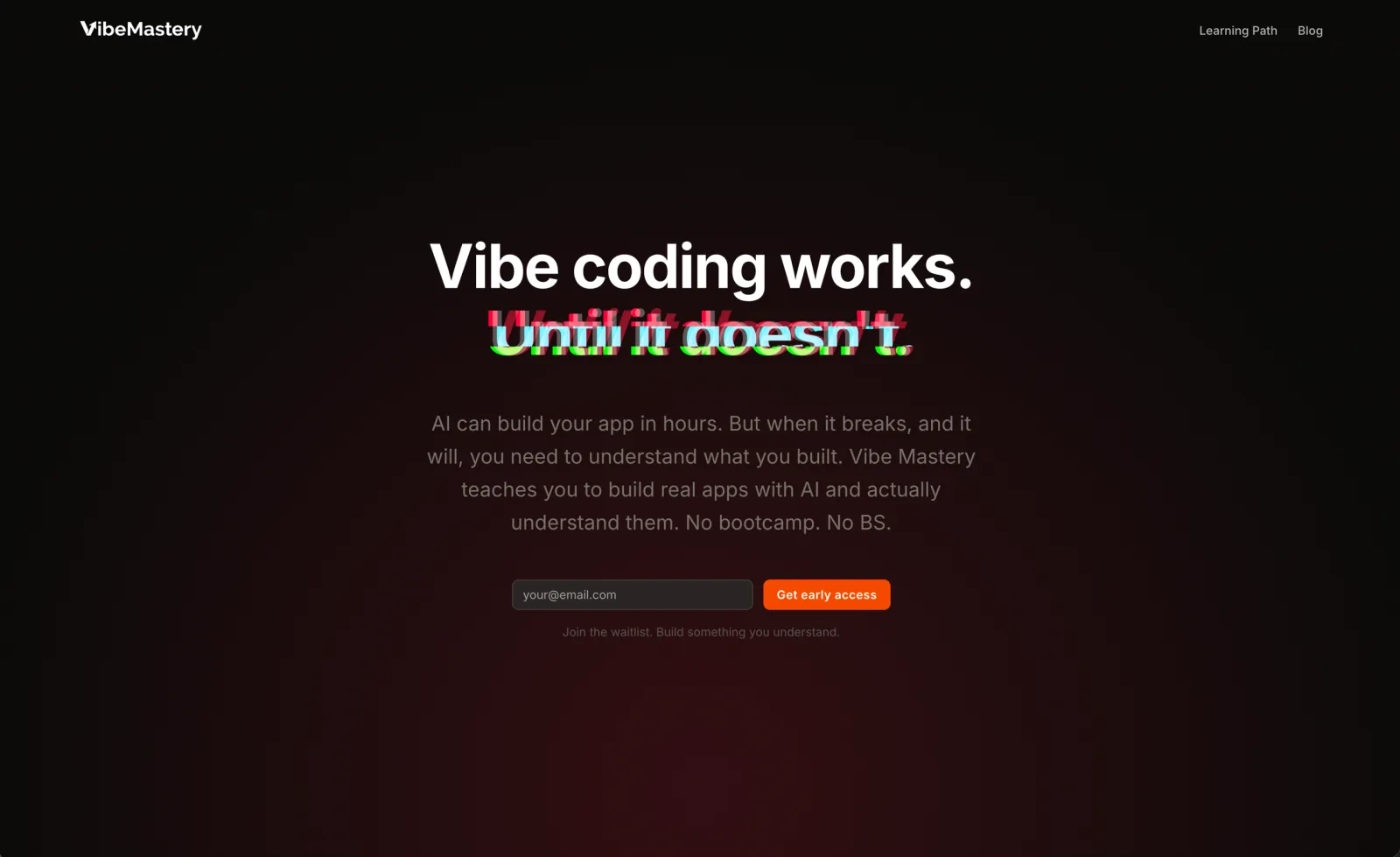
VibeMastery was a course project for people who could get an app started with AI but struggled when it broke. I wanted to help someone without a programming background understand what they were building well enough to make decisions about it.
I chose Laravel and Claude Code so the teaching could stay specific. A lesson could refer to a route or a database migration in the same kind of application the person was working on. I did not want to make them learn a different stack just to follow an example.
The material started before the framework. What happens when you click a link? Which code runs in the browser? What does a server do with a request? I wrote about those questions because they gave someone words to use when reading a plan from an AI agent.
Later lessons introduced Laravel terms. The point was to help a person ask why a plan needed a queue, or what a migration would change. Being able to approve an implementation required understanding something about the proposal. Asking Claude for more code could not replace that work.
Alongside the teaching, I built a Laravel site for publishing articles and collecting interest in the course. It used Filament 5 for administration and Inertia 2 with React 19 for the public pages. The application stored posts and categories. It was a separate publishing app from this personal site.
The people who got in touch were already working as developers. They wanted help with their AI workflows. I had intended the course for people without that background, and I had not found a way to reach them. I decided to close the course rather than change its audience.
The course and community are closed. The site no longer serves the product, and the code remains public. Some of the explanations are published in my writing, where they can be read without joining a course.
I learned that choosing an audience in the lesson plan did not mean I knew how to reach that audience. I would test that part earlier. The articles were useful work to keep, even though the course ended.